


Meet Solveig and Tove
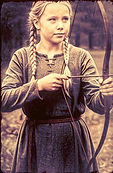
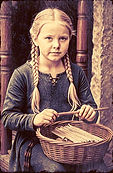
Welcome to the Viking family at the heart of this saga. Each character is drawn from my own family, Solvieg carries the spirit of my eldest granddaughter, Anastasia, while Tove reflects the lively nature of Imogen. At my grandchildren’s request, their parents and even myself, have been woven into the tale. The first book, The Journey Begins, opens the door to their world and invites you to follow the family as their adventure starts.
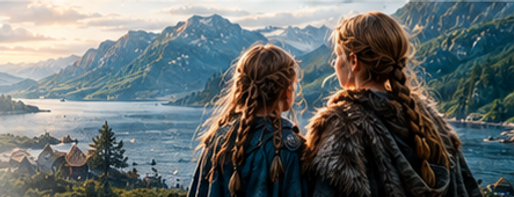
Solveig, age 9 and Tove, age 7 - The Future
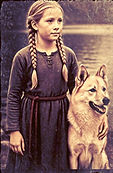
And not forgetting Skål – The Watchful Guardian and family dog.
During the Viking Golden Age, birthdays weren’t part of their traditions. Time was honoured through the turning of the seasons, winter’s arrival and summer’s return. To help readers follow the story, I chose to give the two girls the similar ages to my grandchildren had when I began writing the first book.
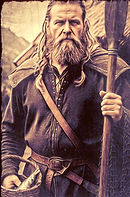
Thorstein – The Fisherman and Warrior.
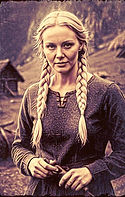
Ingrid – The Steady Flame & heart of the home.
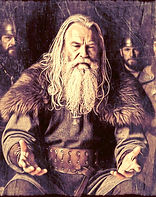
Anders – The Old Warrior, Teller of Tales.
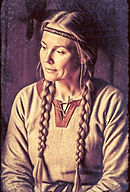
Sigrid – The Keeper of old Traditions
The images shown were produced through AI generation. They are purely illustrative and have no likeness or connection to my real family.

The Golden Age of the Vikings
The Vikings or Northmen, as they were known in early medieval Europe were far more than the raiders of popular imagination. Between the late 8th and mid‑11th centuries, they shaped the history of Britain, Ireland, France, and even distant lands across the Atlantic. This remarkable era, often called the Golden Age of the Vikings, was defined by exploration, innovation, and cultural transformation.
Origins of the Viking Age
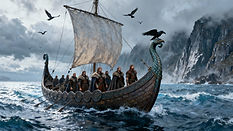
The Viking Age began around 800 AD, when Scandinavian seafarers started venturing beyond their homelands of Norway, Denmark, and Sweden. Their world was one of rugged coastlines, tight-knit communities, and a culture built around honour, skill, and survival. What set the Vikings apart was their mastery of shipbuilding. The iconic longship fast, flexible, and capable of crossing oceans or navigating shallow rivers opened the world to them.
Raids, Trade, and Exploration
Early encounters with Vikings were dramatic. The Anglo‑Saxon Chronicle, England’s great medieval record, describes the first major raid at Lindisfarne in 793 with apocalyptic imagery: fiery skies, omens, and sudden devastation. To the monks who wrote these entries, the Vikings seemed like a divine punishment.
But raiding was only one part of the story. The Vikings were also traders, craftsmen, and explorers. Their networks stretched from:
Iceland and Greenland
The coasts of Britain and Ireland
The rivers of Russia
The markets of Byzantium
Even North America, where Norse explorers reached Vinland centuries before Columbus
This was the first truly connected northern maritime world.
The Danelaw: Vikings in England
One of the most significant Viking legacies in Britain was the creation of the Danelaw the region of northern and eastern England where Danish settlers lived under their own laws. Formed after decades of conflict between the Great Heathen Army and Anglo‑Saxon kingdoms, the Danelaw became a place where Scandinavian and English cultures blended.
Its influence can still be seen today in: place‑names ending in ‑by, ‑thorpe, and ‑toft
Local dialects shaped by Old Norse
Archaeological finds showing Scandinavian settlement and craftsmanship
The Danelaw was not simply a conquered territory; it was a new society, built by settlers who farmed, traded, governed, and raised families on English soil.
A World of Warriors and Kings
As the Golden Age progressed, Viking warbands evolved into powerful dynasties. Norse leaders ruled:
York
Dublin
Novgorod and Kiev
Normandy, founded by Rollo
And even England, under King Cnut the Great
Vikings also served as elite mercenaries in the Varangian Guard of Byzantium, earning fame for their discipline and ferocity.
The End of the Golden Age
By the mid‑11th century, the Viking world was changing. Scandinavia was becoming Christian, European kingdoms were stronger, and new political structures replaced the old raiding culture. The Norman Conquest of 1066, led by descendants of Vikings symbolised the end of the Viking Age and the beginning of a new chapter in European history.
The Viking Legacy
The Vikings left a lasting imprint on Britain and beyond. They reshaped trade, settlement, language, law, and identity. Their Golden Age was not just an era of conflict, but a period of connection, movement, and cultural exchange that helped shape the medieval world.
Today, the Vikings remain a symbol of exploration, resilience, and the human drive to push beyond the horizon.
The World Before the Golden Age
Before their rise, Scandinavia was a patchwork of small kingdoms and clan territories. Society revolved around farming, fishing, and local chieftains. Resources were limited, winters were harsh, and population pressures grew. These conditions encouraged young men to seek wealth and opportunity abroad and once the longship emerged, the world opened before them.